
The History of Japanese Onsen: Bathe a Modern Interpretation
Long before wellness became an industry, it was geography. Japan sits on the Pacific Ring of Fire, one of the most volcanically active regions in the world. Across the archipelago, underground heat rises to the surface as mineral rich thermal water. These natural hot springs, known as onsen, have shaped Japanese life for over a thousand years.
The earliest written references to onsen appear in the eighth century Nihon Shoki. Even then, the springs were regarded not simply as places to bathe, but as sites of healing. Samurai recovered from battle in them. Farmers eased tired muscles. Monks sought purification. Emperors travelled considerable distances to immerse themselves in waters believed to hold restorative properties.
From the beginning, onsen culture developed around three principles. Purification. Respect. Community. Purification is both physical and ritual. Before entering an onsen, bathers wash thoroughly at small seated stations. The act is deliberate and unhurried. Cleanliness is foundational. Only once the body is prepared does one enter the shared pool. The water is treated as something worthy of care. Respect governs behaviour. Voices remain quiet. Movement is restrained. Towels do not enter the water. The emphasis is on stillness and awareness. Architecture traditionally reinforces this mindset. Timber, stone and open air are common materials. Views of mountains or forest are framed, not dominated. The landscape is allowed to remain the primary presence.
Community forms the third pillar. Onsen are rarely solitary experiences. They are shared spaces, often gender segregated, where hierarchy dissolves. Titles and uniforms disappear. The water equalises. In these spaces, status recedes and the body becomes the common denominator.
Over centuries, entire towns formed around thermal springs. Places such as Kusatsu, Hakone, Beppu and Kinosaki grew into destinations centred on bathing culture. Ryokan inns developed to host travellers. Seasonal bathing became ritualised. Snow settling on steaming outdoor baths became an enduring image of Japanese winter. Yet onsen culture has never been static. It has continually adapted to changing contexts. In the post war era, public bathhouses brought similar rituals into dense urban environments. Contemporary Japanese architects have reinterpreted traditional bathing structures using concrete, glass and steel. The aesthetic language has evolved. The underlying intent has remained consistent. Immersion as reset.
From Volcanic Japan to Alpine Queenstown
Bathe by Aluume exists in a different geological and cultural context. There is no volcanic spring rising naturally through Brecon Street. The water is drawn, filtered, balanced and mineralised. The setting is urban alpine rather than rural Japanese. The rhythm of Queenstown is shaped by skiing, riding, hiking and tourism rather than temple rituals or agricultural cycles.
And yet, the philosophical lineage is clear.
Aluume was conceived around purposeful recovery. Queenstown attracts people who come here to move. To hike Ben Lomond. To ride the Queenstown Trails. To ski Coronet Peak. To paddle across Lake Wakatipu. The body is used. The landscape is engaged. Recovery becomes part of the rhythm of the place. It was equally shaped by a design led philosophy. Architecture is restrained and intentional. Materials are chosen for texture and longevity. Light, proportion and sightlines are carefully resolved. The built form sits quietly within the alpine setting. Design shapes how guests move, pause and immerse.
In this sense, Bathe is not a replication of Japanese onsen culture. It is a contemporary translation.
The emphasis on preparation remains. Guests move through reception and into a structured bathing experience. Water is balanced with magnesium, a mineral long associated with muscle relaxation and nervous system support. Temperatures are controlled. Clean water standards are rigorous. The experience is intentional.
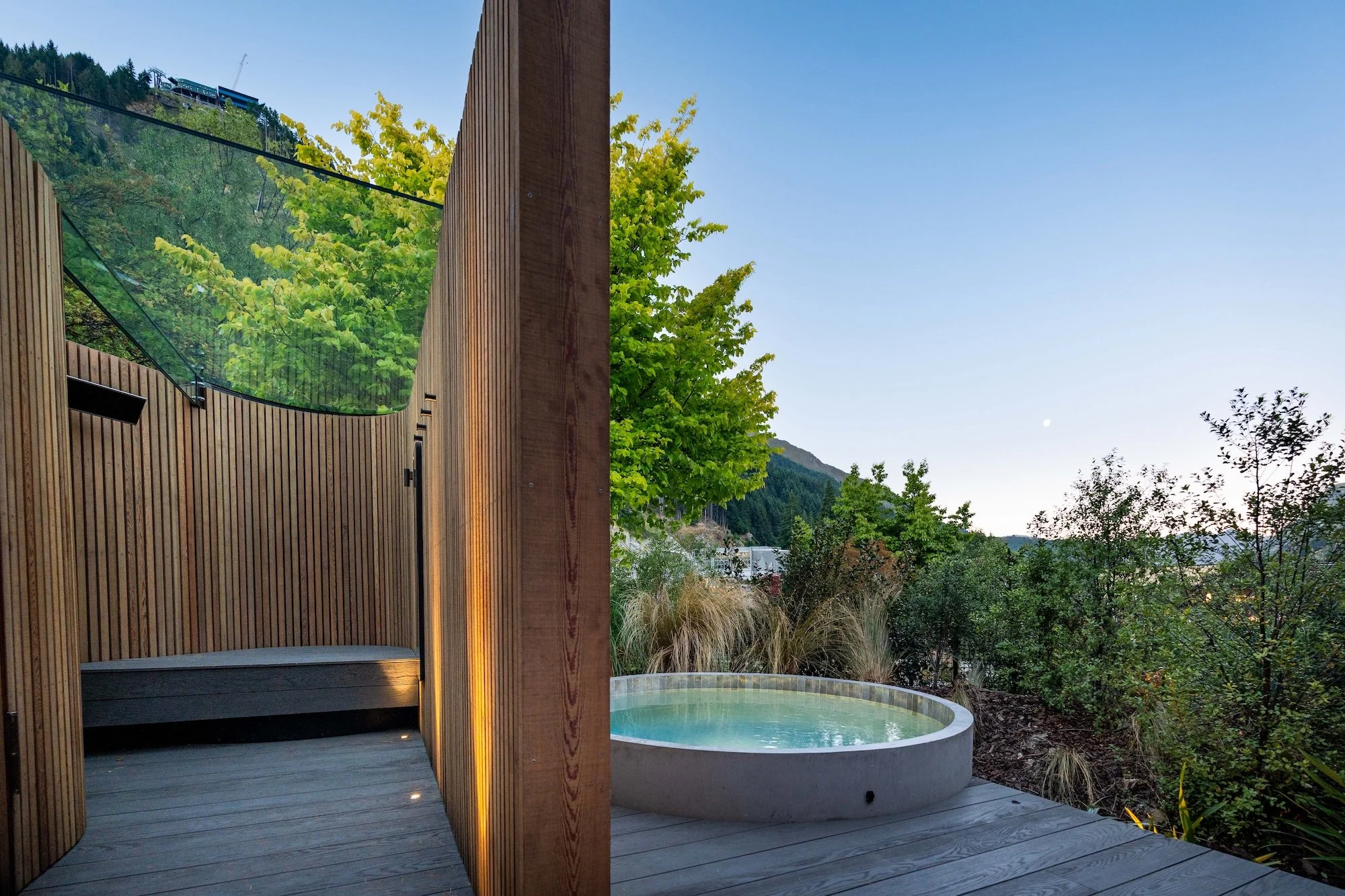
Respect remains. The architecture is restrained. Materials lean into timber, stone and muted tones. Steam softens the line between pool and mountain. Views of the Remarkables are framed rather than competed with. The water remains central to the experience.
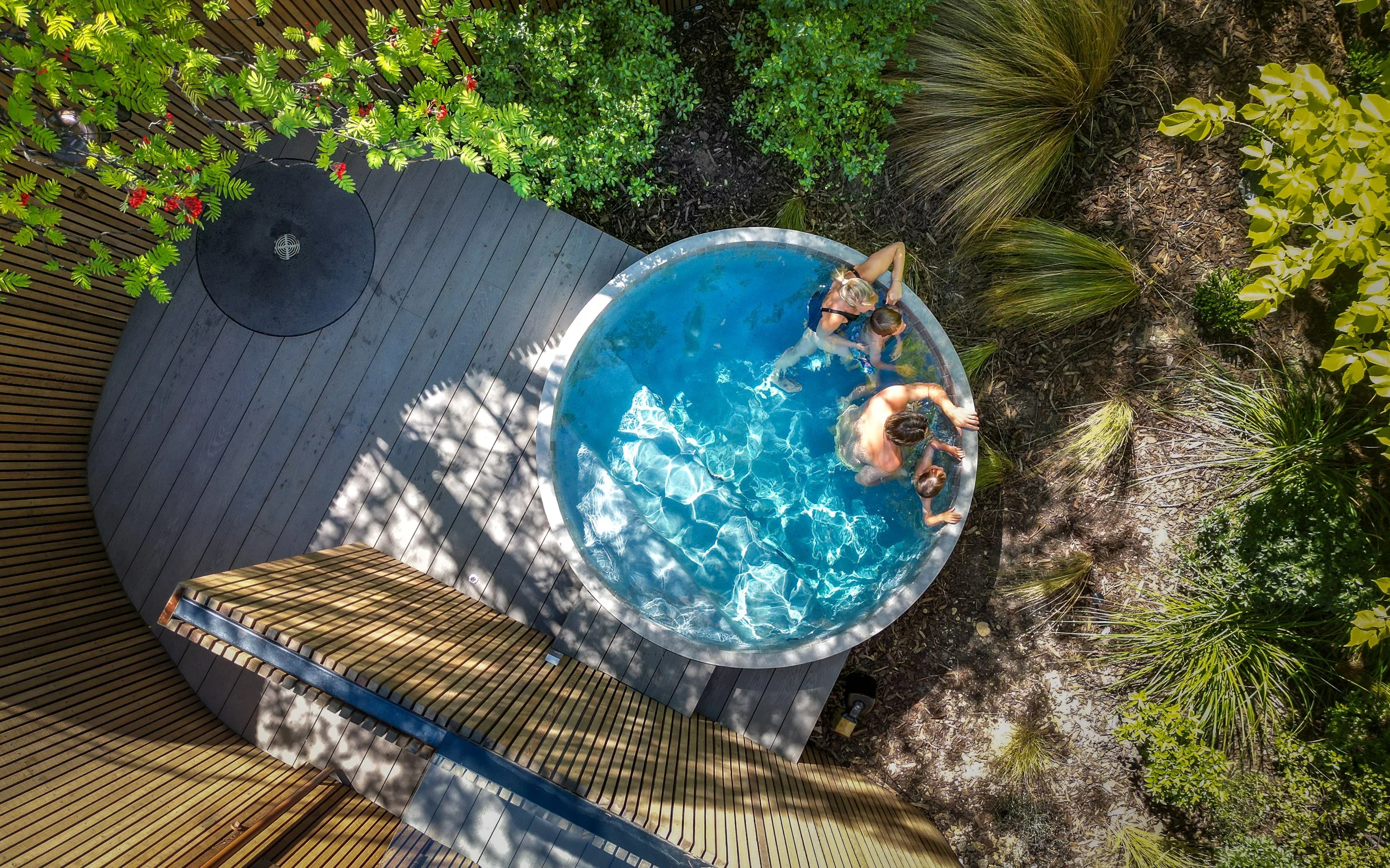
Community remains. The communal pool is social by design. It sits close to Brecon Street, connected to the energy of town. It is not hidden away from Queenstown’s movement but positioned within it. Conversation and connection coexist with recovery. The atmosphere is relaxed rather than ceremonial.
Where traditional onsen dissolve hierarchy, Bathe dissolves pace. Phones lower. Shoulders drop. Conversations slow. The effect is similar even if the aesthetic and cultural language differ.
Cultural Continuity, Modern Expression
Japanese onsen culture rests on the belief that water can recalibrate both body and mind. Not through spectacle, but through temperature, mineral content and stillness. Modern wellness can often lean toward performance. Ice baths timed for endurance. Contrast therapy framed as challenge. Experiences curated for visual impact. The original onsen tradition offers a quieter counterpoint. Recovery does not need to be extreme to be effective. Warmth is often enough.
Bathe sits within that broader continuum. It acknowledges the lineage of thermal bathing while adapting it to place. There is no attempt to replicate Japanese iconography or ritual. Instead, the interpretation is architectural and operational. Structured entry. Balanced mineral water. Controlled temperatures. Designed sightlines. A focus on how the body responds to immersion. Queenstown is not Japan. Brecon Street is not Hakone. Both, however, share a relationship between landscape and exertion. Mountains create effort. Water provides relief.
The modern interpretation, then, is less about imitation and more about alignment. A shared understanding that immersion matters. That steam against cold alpine air heightens awareness. That mineral water supports tired muscles. That architecture should frame landscape rather than compete with it. And that in a town defined by momentum, there must also be pause.
In this way, Bathe by Aluume is not an onsen. It is something distinctly its own. An urban alpine mineral baths concept shaped by Japanese precedent, Queenstown geography and contemporary design thinking. The history of onsen is long and volcanic. The modern interpretation is intentional and local. Both are grounded in the same simple premise. Water, held at the right temperature, has the capacity to restore.
